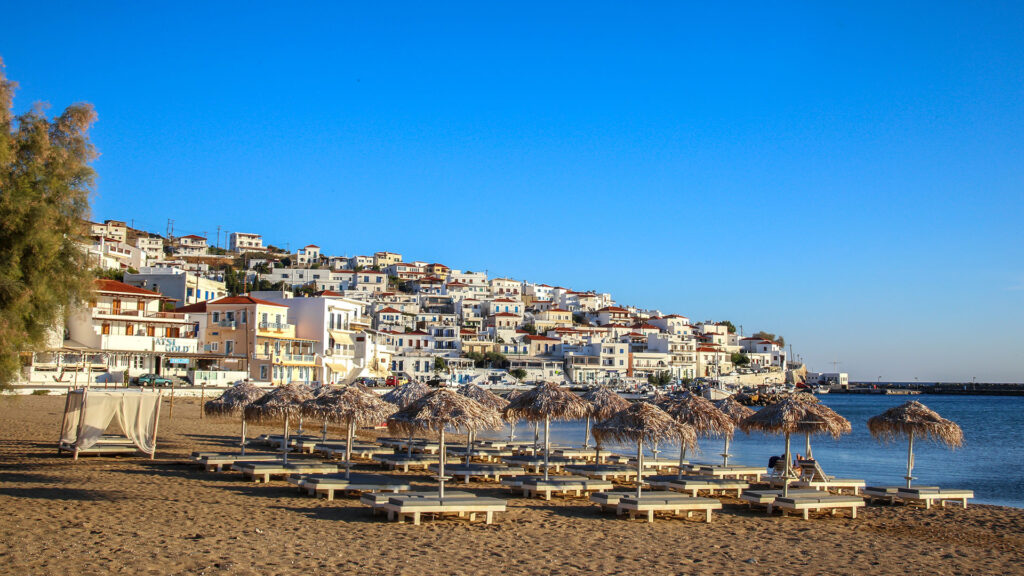
Batsi in Andros is a traditional fishing village. It is located 8 km away from Gavrio and 27 km away from Chora and has many bars, tavernas, and tourist shops. The main beach in Batsi is fully organized and sheltered and has fine golden sand. Heading towards Piso Vrisi, where folklore says that fairies used to live, as well as Ano Batsi, you will discover many beauties in the old settlement.
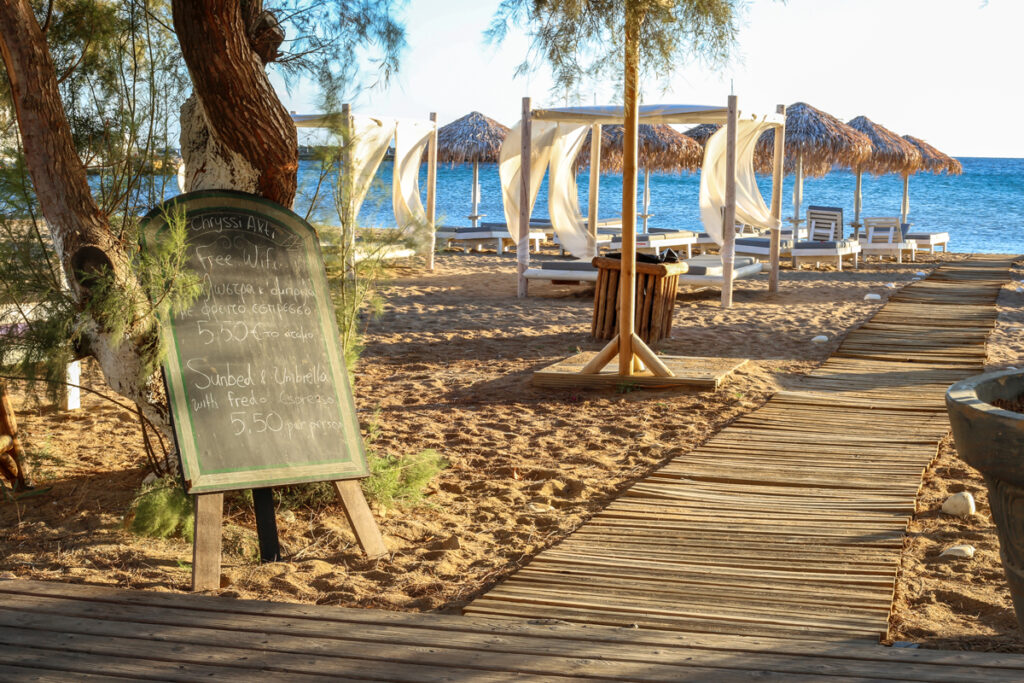
Batsi beach: Batsi beach is located inside the settlement and is an organized, family beach with tamarisks. It is safe for small children and ideal for relaxing by the sea.
Kolona: A small quiet, sandy beach opposite Batsi with a lovely view of the settlement.
Stivari: Just one kilometer from the bustling harbor of Batsi, this small beach is quiet, and secluded, combining rocks, sand, and pebbles – both in and out of the sea.
Agia Marina: Narrow and sandy beach. It mainly attracts families and has a very nice tavern built on the sand.
Ypsili is one of the most important fortified settlements of the early Iron Age in the South Aegean. A large part of the urban fabric of the archaic phase of the Acropolis, as well as the fortification of the Geometric period, has recently been uncovered. Large farmhouses of the historical period have come to light in the wider area of Ypsili. The ancient city of Ypsili, in Aprovatou, was discovered in the early 1980s.
The first excavations brought to light important ancient remains, such as the temple in the center of the acropolis, buildings, and part of the wall, as well as many movable finds. The excavation has uncovered important finds, valuable for the Geometric and Archaic periods in the Cyclades and the Aegean Sea in general.
The Museum is housed in a building of the community of Paleopolis, sponsored by the Vasilis & Elise Goulandris Foundation. Its collection includes sculptures, statues, coins, and inscriptions. They were found during excavations at the site of the ancient capital of the island, Paleopolis.
The most important exhibits are the marble lion, the marble statuette of Artemis, and the marble plaque with the only surviving hymn in Greece in honor of the goddess Isis. It is located in the center of the settlement of Paleopolis (15 km from Gavrio and 20 km from Chora).
The Monastery of Zoodochos Pigi or Agia is the largest monastery on the island and is located between Gavrio and Batsi. At first, the monastery was inhabited by monks until 1928. Later it was converted into a women’s monastery. The church of the monastery is of Byzantine style with a wooden carved iconostasis. You will also find a fantastic library with books and manuscripts. The museum with its sacred vestments and utensils and a small collection of prehistoric tools will surely amaze you. The monastery celebrates on Easter Friday.
An amazing circular route to explore the important archaeological site of Paleopolis, the ancient capital of Andros for over a millennium. Interesting surviving relics, overgrown sections of the route, wonderful views of the coastline, and the impressive mountain range of Petalos. The pristine beach of Paleopolis with its sunken but visible ancient breakwater is just some of the attractions. Connecting part of the route leads to the main hiking trail that connects Ano Aprovatou via Ano Paleopolis with Pitrofo and Strapourgies.
Access: Follow the road from Gavrio to Paleopolis, on the vertical road to the beach opposite the Archaeological Museum.
Condition of the route: Passable, with vegetation in places.
Beautiful route from the tourist coastline to the rural hinterland.
Access: Follow the road from Gavrio to Batsi, turning towards Katakilo, on a vertical concrete road parallel to the house.
Route condition: Passable (small narrow and steep sections in Arni)
Chryssi Akti Hotel in Andros Island is proudly powered by WordPress